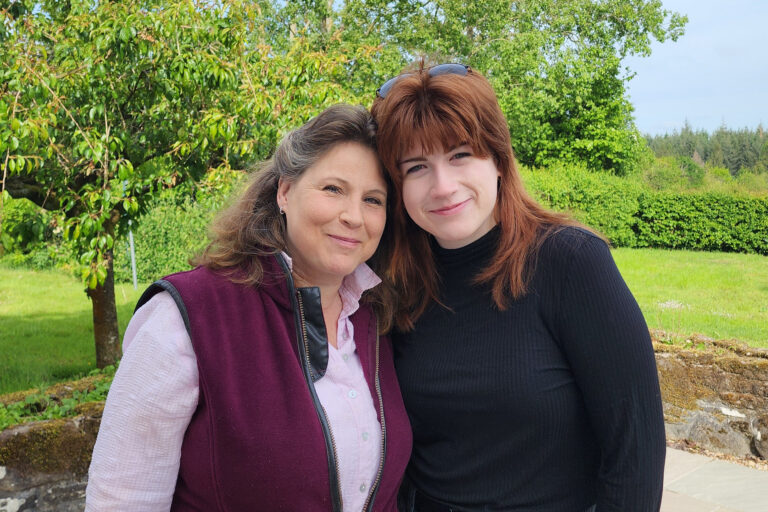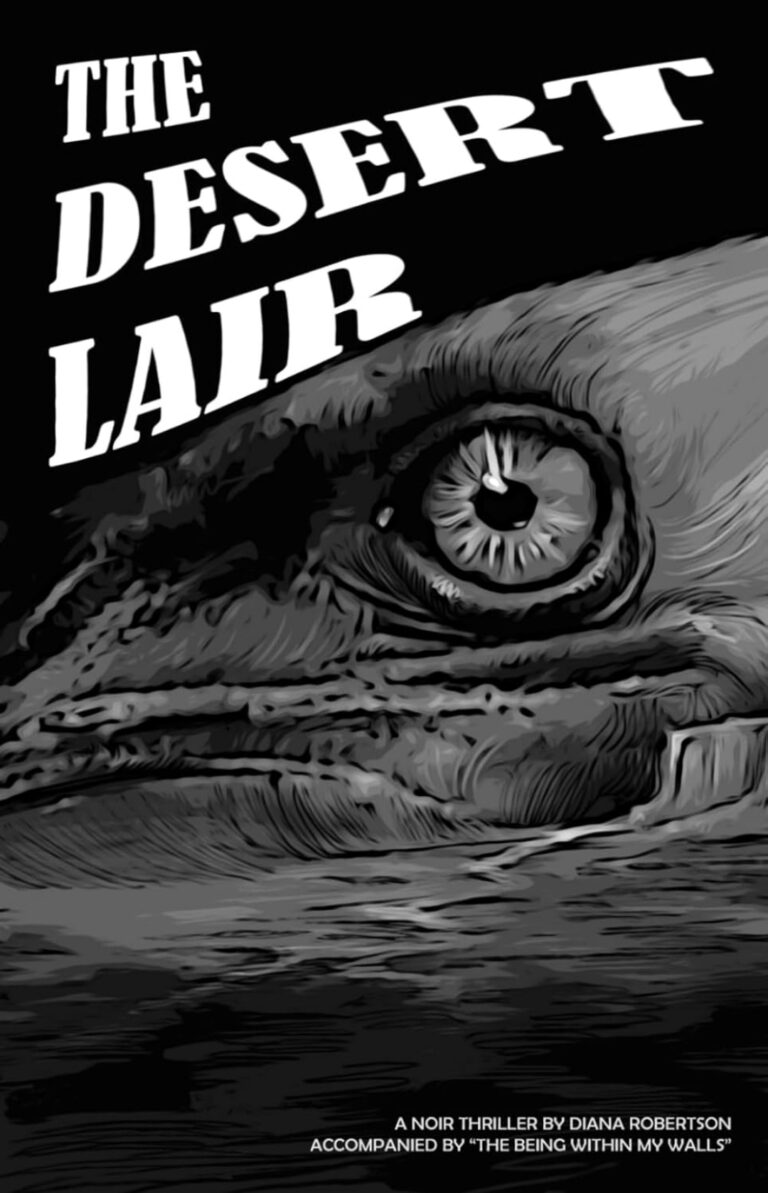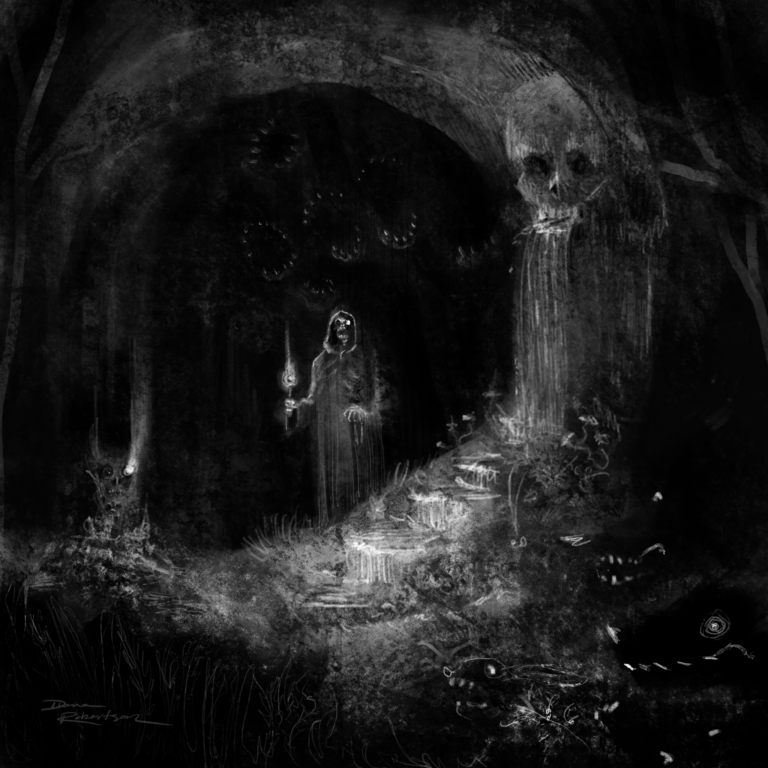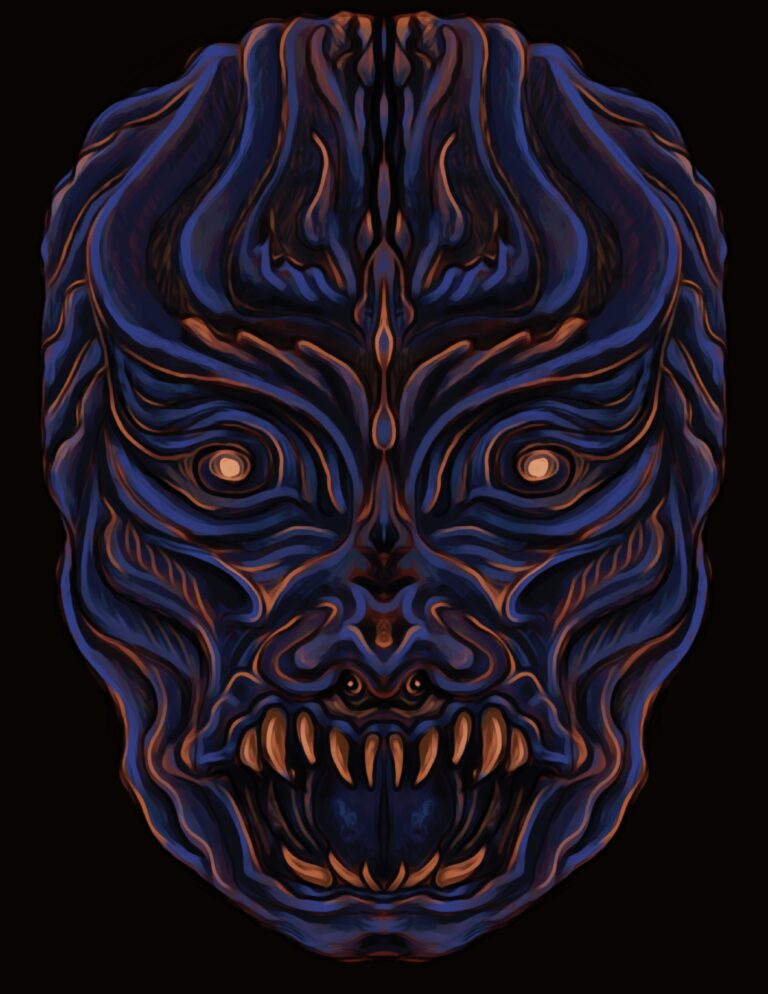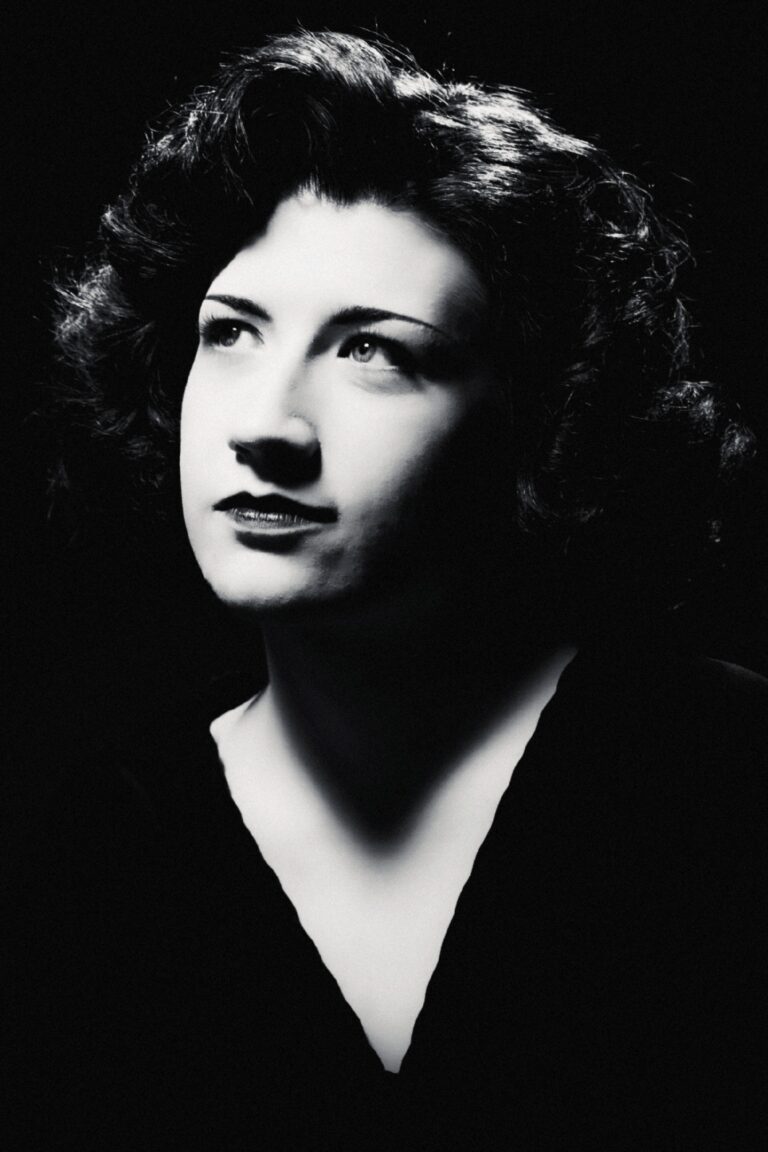
Diana Robertson is an artist, creature designer, fabricator, filmmaker, writer, and archivist whose interdisciplinary career moves fluidly between imaginative creation and cultural preservation. A 2020 graduate of Florida State University’s Bachelor of Fine Arts program in Studio Art, Robertson has developed a distinctive practice informed by classic and international cinema, horror, puppetry, wildlife, and the psychological dimensions of storytelling.
While at FSU, Robertson combined courses in sculpture, soft sculpture, mold making and casting, digital media, animation, and filmmaking to pursue an emerging interest in creature effects and puppetry. With the encouragement of faculty who supported experimentation beyond conventional assignments, she created her first puppets and creatures, participated in Jim Henson’s Creature Shop Challenge LIVE!, and began building relationships with professionals at the Jim Henson Company and the Center for Puppetry Arts. She credits this freedom to test ideas and stretch disciplinary boundaries with establishing the foundation for her unconventional career.
Following graduation, Robertson worked as a junior fabricator at Jim Henson’s Creature Shop and later served as creature designer and fabricator for Qélawet, a project supported by the Sundance Indigenous Program. Her practice encompasses sculpture, fabrication, creature suits, puppetry, concept art, illustration, directing, performance, and experimental filmmaking. She is also an archivist for the Ray and Diana Harryhausen Foundation and a researcher for the Estate of actor Brian Donlevy, extending her commitment to storytelling through the preservation of artistic legacies.
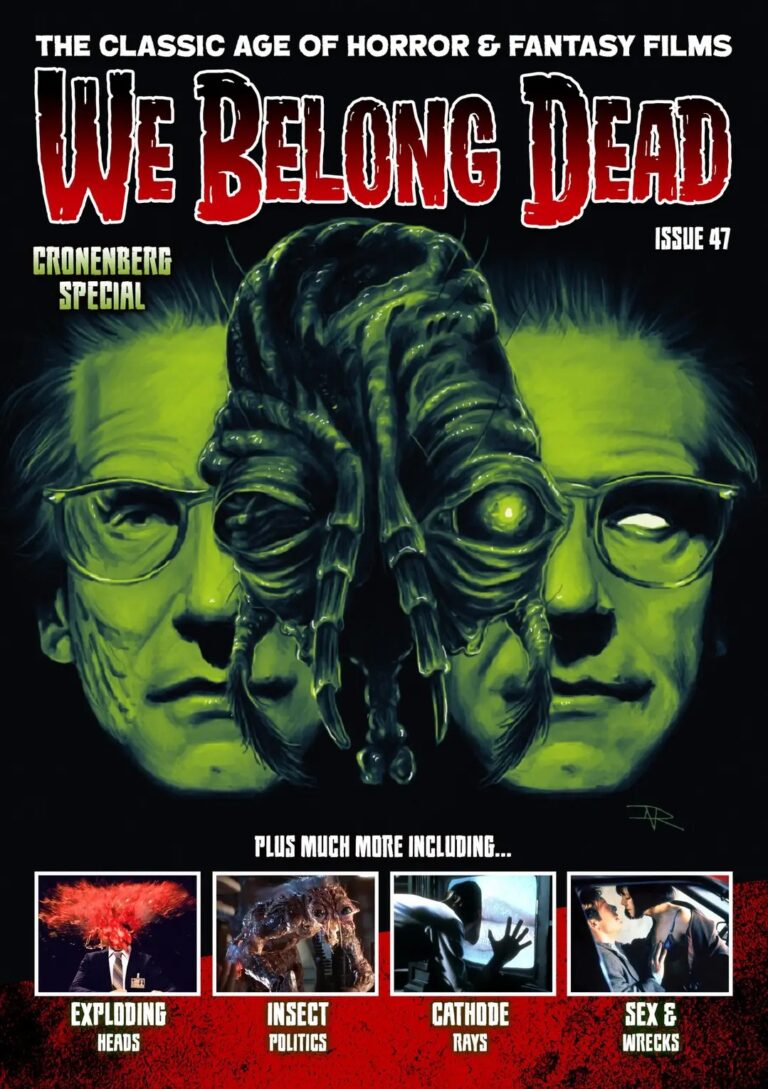
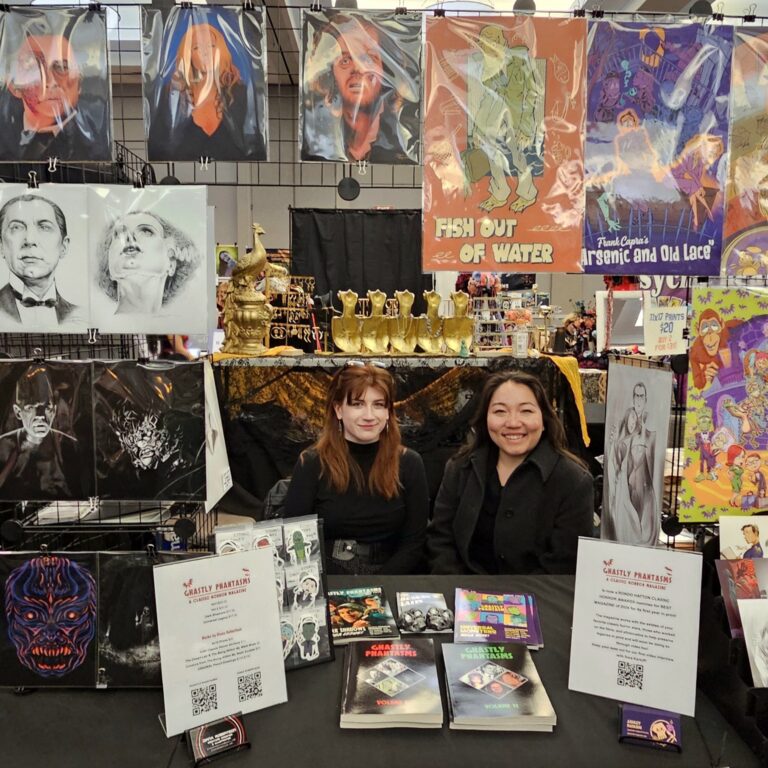
Robertson is the editor-in-chief and creative director of Ghastly Phantasms, a twice-nominated Rondo Hatton Classic Horror Award publication that brings together interviews, research, illustration, and writing centered on classic horror and film history. Across these varied roles, her work is unified by a belief in storytelling as a means of encouraging empathy and preserving the lives, creative processes, and cultural contributions of others.
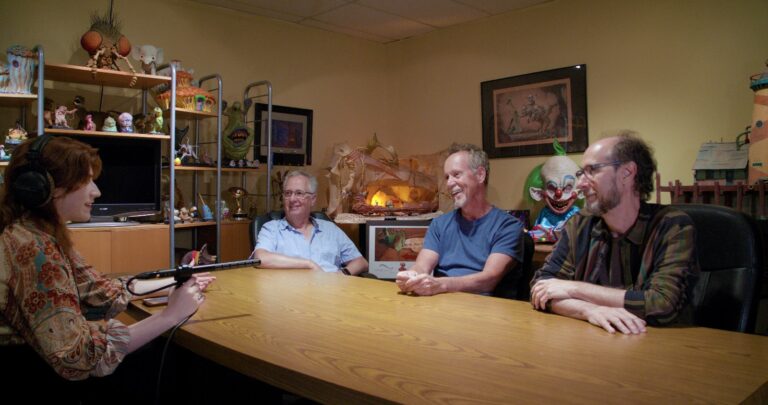
In this interview, Robertson reflects on developing an individualized path at FSU, entering the highly specialized field of creature effects, working at the Jim Henson Creature Shop, designing for another filmmaker’s narrative, preserving the legacy of Ray Harryhausen, and resisting the pressure to confine a creative life within a single professional category.
1. On the creating side of things at Florida State University, I wanted to explore my fascination with creature effects and puppetry when there was no curriculum for it. While I did teach myself a lot on my own regarding puppetry and filmmaking, I had help facilitating my exploring from people like Kevin Curry (my major professor), Tenne’ Hart (soft sculpture professor), and Carrie Ann Baade (BFA Director). My first puppet I ever made was done via a loophole in a project rubric in one of Kevin Curry’s classes, where I created a fantasy-type version of my dog. It was just from the shoulders up, but it let me start to figure out things with mechanisms and all around fabrication that then set me up for creating my first full creature just a few months later for Jim Henson’s Creature Shop Challenge LIVE! at Dragon Con, which Carrie Ann Baade gave me permission to go to when that was literally the first week of classes that semester and in another state. Participating in the challenge led to my first introductions to people related to the Henson Company and the Center for Puppetry Arts in Atlanta, GA. The following year, I was able to volunteer at CPA in multiple areas (including puppeteering) and learn a great deal about puppetry up close. After my Summer at CPA, Dragon Con came around again and this time I was able to do a portfolio review (part of the DC Puppetry Track, run by Beau Brown) with Pete Brooke, the Creative Supervisor of the Jim Henson Creature Shop, with a portfolio full of both personal projects and ones from classes like those with Curry and Hart. I was invited to visit the Creature Shop from that review, but COVID closed the shop the day before I was to fly over. But instead of losing contact, Brooke would do Zoom calls with me regularly to keep up with what I was working on while still at FSU, which eventually led to my working for the Creature Shop.
When it comes to the archival side of my work, I had been an extern for the educational department at the FSU Museum of Fine Arts in high school and then an intern for then-director Preston McLane as an undergrad. In both roles, I learned foundational elements that I have utilized in numbers of ways even to this day on my unconventional route. A key moment, though, came after my time as an intern when McLane asked if I would be interested in doing an exhibit on my puppetry work in the museum. At the time, I felt I had nowhere near enough work to be able to put together a proper exhibit, but I had been introduced to puppeteer Jan Kaufman (who was a part of the New York City puppetry scene with others like Jim Henson, Frank Oz, and Bil Baird) by McLane just before then and felt an exhibit of her life’s work would be wonderful. So, I proposed we do an exhibit of her work and it was heartily approved. I learned a great deal about Jan and her life’s work while curating the exhibit. I have always viewed her as a key figure in my life and a mentor with my work. While she had great impact on my figuring out why I wanted to do puppetry (as a tool of communication), she was also my first “legacy subject”. Seeing her reaction to the exhibit on opening day is a reaction I will never forget and always cherish. On top of the exhibit, I was able to have our interview and other documentation of her work go into the Nancy Staub Research Library at CPA and the two of us hosted a Puppetry Arts Day at the MoFA, where we discussed our puppets and how we use them to communicate.
My work as an artist and future work as an archivist truly stemmed from the support and considerations of the key people mentioned above (plus my family). But I am fortunate that professors would allow me to stretch rubrics to facilitate experimentation and push me to be the best I could be.
2. I first realized puppetry/creature fx was a career path at Dragon Con when I met Brian Herring and Dave Chapman, who were fresh off working on STAR WARS: THE FORCE AWAKENS. I had watched STAR WARS and other fx laden films as a child and then JIM HENSON’S CREATURE SHOP CHALLENGE as a teenager, but it never occurred to me that that was something that I could pursue. I remember on my way home from the convention, I thought to myself “I want to do that”. This was when I was still in high school, and soon after I was in an accident that nearly completely shattered me as a person. There was a rather dark period of time for me after that, but then, in an attempt to help bring me out of it, my parents and aunt took me to Star Wars Celebration in Orlando, FL, where I was able to tell Herring I got into FSU. From my talk with him, I felt a renewed energy and decided I could go at any time, so why not actually pursue such a crazy career. At FSU, I was mainly taking classes relating to my Studio Art degree, but was also taking the required art history/museum courses for the BFA program. During one class, I was able to interview Herring for an assignment and I think I caught the interviewer bug there. Looking back, I had grappled with choosing creating art vs. museum work. I still struggle with that now. Sometimes you feel a pressure to choose one or the other, but, for me, it all boils down to being able to tell stories that at their core are well-rounded human stories and encourage empathy.
3. I picked and chose so many different little things from courses at FSU to build up my fabrication abilities. Courses that really stick out in my memory for this include 3D Foundations, Digital Foundations, Soft Sculpture, Mold Making & Casting, Video Art, Experimental Animation, and Leadership in Film. These really allowed me to learn an array of either fabrication techniques or documentation techniques. But there were also non-art department courses that helped in ways some might not think of. Math is sometimes a big part of fabrication. Mythology and English courses helped with my ability to research and build stories for what I was fabricating. The course content from Forensic Science informed being more anatomically correct. With this path, you can pull from just about anything to create better informed work because you have to pull from so many different places. If you are just a fabricator alone, you can be doing things like sewing, foam work, molding and casting, painting, sculpting, and so much more. But in my case, I am often having to design as well and not for still objects. I’m having to design and fabricate puppets or creature suits, which requires keeping the fact that it all has to move and not look unnatural in mind. With my creature work, I often wear the hats of a researcher, writer, animal observer, designer, engineer, sculptor, mold maker and caster, and painter. Throw in sewing and 3D printing and you’ve got a basic gist of what goes into just fabricating. If you’re performing and/or filming as well, that’s a whole different pile of hats on your head too. So, for anyone looking at what courses to take while at FSU, you can get a lot from the foundational art courses, but also the “non-art” courses as well if you keep your mind open.
4. Working at the Henson Creature Shop was something I worked towards my entire time at FSU. When I finally moved out to LA after graduating and COVID, the strikes happened. It took a while, but I got an email from Brooke one day asking if I was available to come in the following Monday to be on the crew for some projects. It was my first shop job and I am very fortunate to say everyone there was wonderful to work with and it felt like a safe place. I had rather developed some disabilities post-COVID, but it wasn’t an issue for the shop and I was able to contribute. Day one was rather intense being asked if I could use a sewing machine and an industrial serger. I said, “Show me once and I can do it.” and I luckily was able to. I had been brought in to work on a film where the designs were to be precisely followed, so there was to be no going astray, but when that project wound down I was snatched up by another smaller team working on a mockup suit for something far more up my alley. They didn’t have a sculptor and remembered me saying I had sculpted on personal projects, so on the dot I had to pick up sculpting foam and the ability to use a couple different shop tools I hadn’t before. A few years before, I had been at a convention talking to the late Mike McCormick and he said, “When you get in the creature shop, you’ll learn very fast. But then you’ll want to do your own work.” I had always thought he would be right about the first part, but surely not the second. As you said, working at the shop is a dream for many, but what do we do after reaching that dream? I realized, while I did really enjoy working there and learned A LOT very quickly, Mike was right. I found myself realizing I wanted to create with more freedom. If I wasn’t the director, I wanted to be able to work closely with the director to bring their vision to life. Working for the Henson Creature Shop has definitely opened doors for me and I have been able to work on other Non-Disclosure type projects since, but it led me to realize I wanted to do even more with my life than I had anticipated.
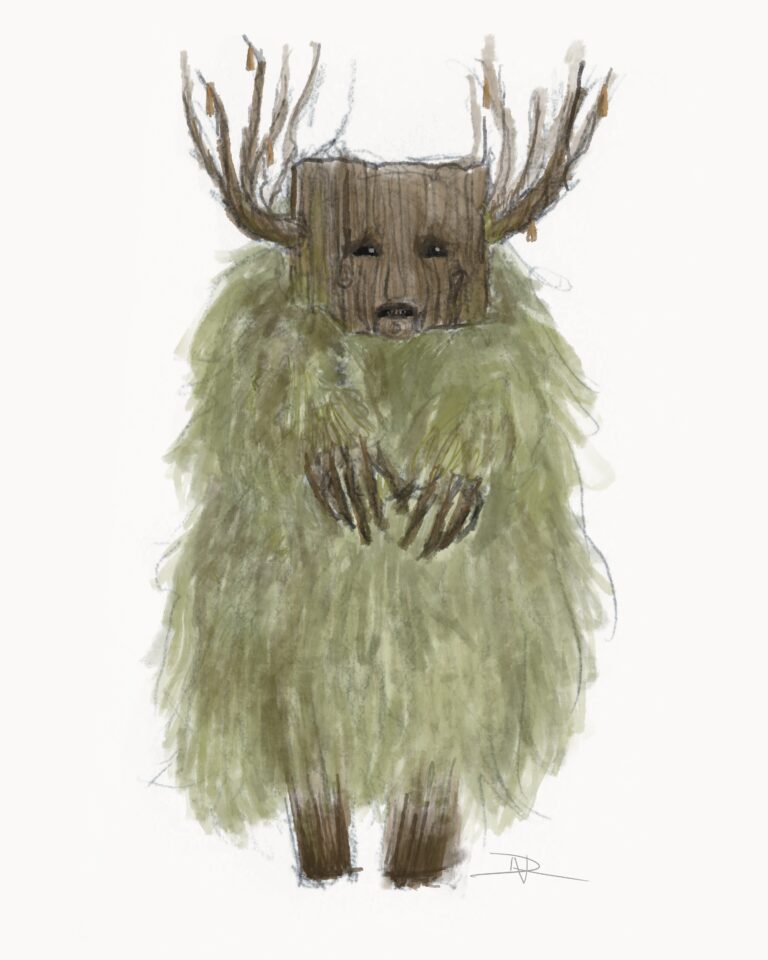
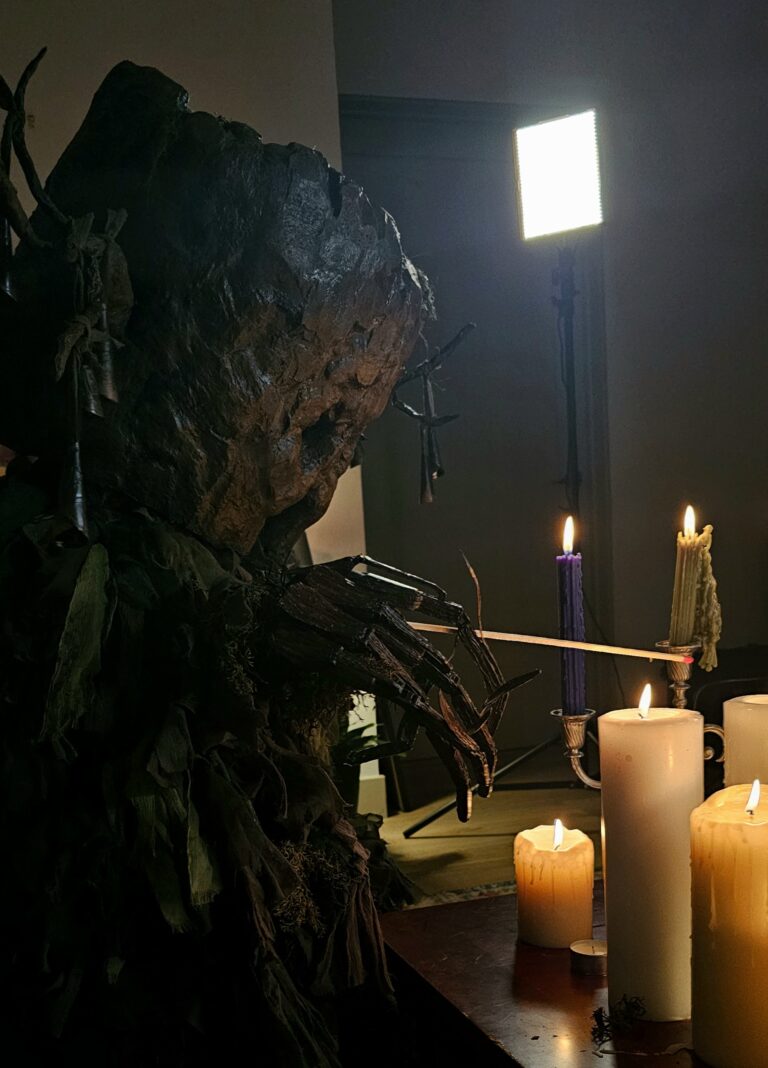
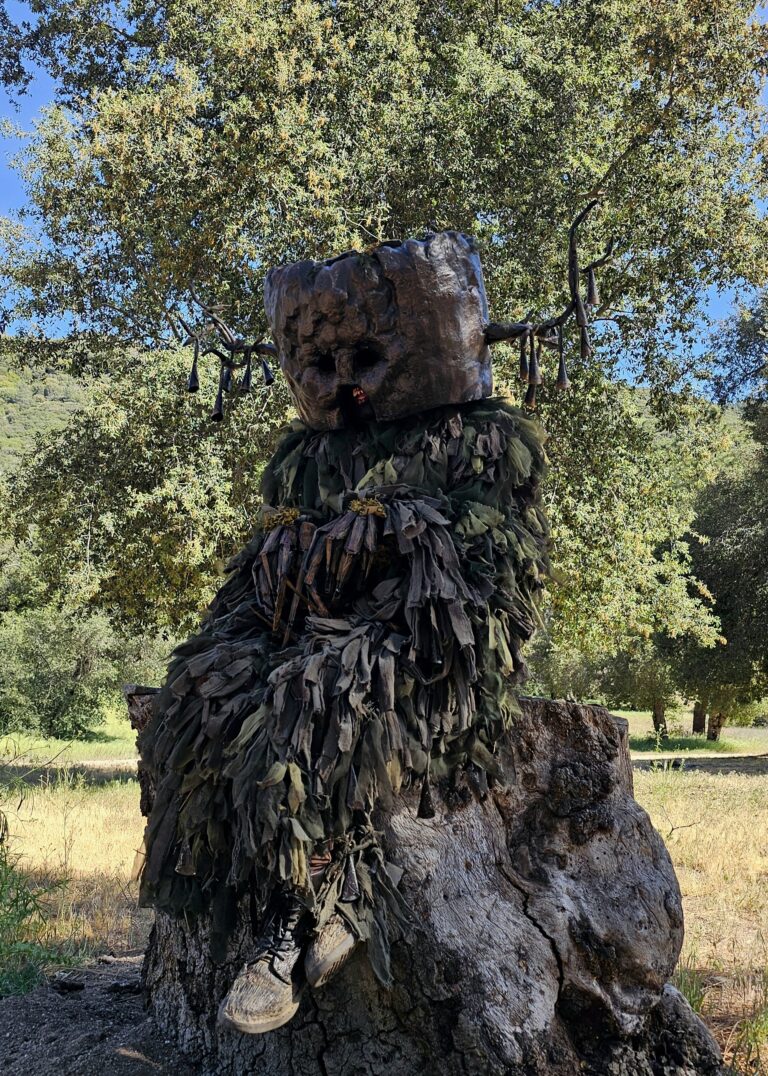
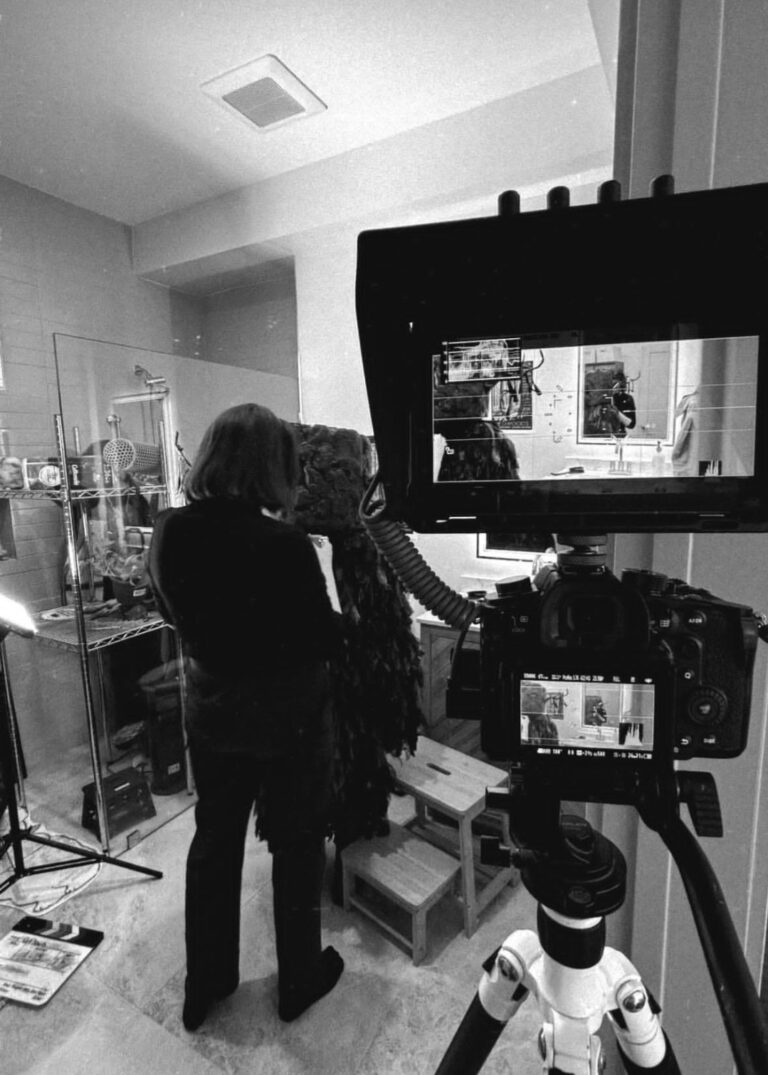
5. With my work for QÉLAWET, directed by Gabz Norte and recipient of the Sundance Indigenous Program grant, it was my first time designing and fabricating for someone else’s story and also my first time making a fully-fledged creature suit that would be filmed. In regard to designing for narrative storytelling versus independent sculptural work, I would have to say all my work involves narrative. Each creature has a story that informs how it looks and how it moves. That is usually just all up to me, though. This time, I was to tell someone else’s story, which involves a great deal of communication, understanding, and compromise. Luckily, I have been good friends with Gabz for a number of years and our thesis films had eerie similarities, so we were on a good similar wavelength. The creature did have a great deal of narrative details worked into its’ design, especially with how our performer, Maile Chung, would be walking in a perpetual crouch. This crouch greatly informed the walk of the creature and how Maile could convey emotions through body language as the story unfolded.
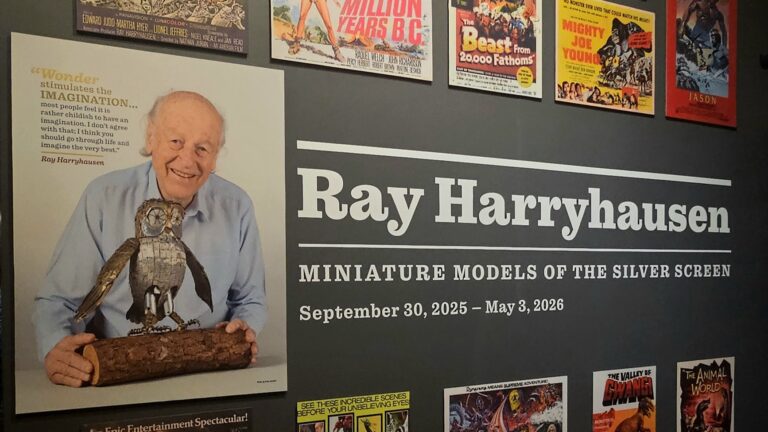
6. Ray Harryhausen was someone whose films I actually didn’t grow up with, but found an appreciation of through interviewing and subsequently befriending/working for his daughter Vanessa. Not only did he create what we saw on screen, but he also did other artworks of various mediums and had a great appreciation for other artists like Gustave Doré. As I work with objects from the Harryhausen collection, I am able to observe the fully-rounded scope of Ray’s work and interests, which I relate to in ways with my array of mediums I work with and similar interests.
There have been a few times in my life where I have made attempts at including stop motion in my film projects, but thought myself too unskilled to pursue them beyond little bits here and there. As I continue on with my own work and growing as an artist, I find myself tempted to experiment with stop motion again in the future as I have become surrounded by support and knowledge from Vanessa and friends of the Foundation.
7. I believe the key to the “balance” is my neurodivergence. If I did not have the brain that I do, I would not have special interests on broader topics that are then filled out with what I like to call “sub-hyperfixations”. For example, my special interest in puppetry but with sub-hyperfixations on the different types of puppets. Or my special interest in film with sub-hyperfixations with Eastern European film (which can be further broken down into animation, war time, Thaw-era Soviet, etc.), Old Hollywood, classic horror, and more.
I find myself constantly wanting to feel like I’m in some sort of treasure hunt with things, constantly seeking out information and feeding my brain’s expanding library. This can also come from not only personal research, but everyday events and conversations. To balance the number of factors that go into my work, I feel you have to have a certain degree of openness to where you can find inspiration in anything. You cast a wide net before you with an open mind and can be pleasantly surprised by what it brings you.
8. I’ve come to realize that, like the work I want to do, nothing in life really fits into a neat traditional category (unless you force it to and it feels like imprisonment). If you find you’re making work that is “unusual”, you are as free as you let yourself be with it. I’m at a point literally right as I’m writing this where I feel I am entering a new chapter of my work where I’ve come to realize what I thought I wanted for the longest time was actually just the “acceptable” and “successful” version of what I really want to do. Working on big productions with big name effects shops is what makes the most sense to anyone in the general public when I try to describe what I do. But I see now I keep ambling down a path that feels only adjacent to the one I should be on and have been on it because of the influence of others. My true work is something that I make because I have no choice. I have found that when I make my most “me” work that is “unusual” and doesn’t fit in a neat category is when it speaks to people the most. I did have blips of feeling very connected to this while at FSU because of the encouragement I received to experiment and grow, all while with others doing the same. Once you’re out of there, it’s up to you to keep up to momentum, curiosity, and experimentation and find others to experiment alongside you. That can be a very challenging thing to do, but it’s so incredibly worth it. I moved out to Los Angeles thinking one way and hardly knowing anyone, but I’m now able to say I’ve surrounded myself with an ever-growing network of support that is allowing me to now feel like I can really dig back into myself and create.
All in all, I have found you can be creative in more than one way. You don’t have to be pigeonholed. The only person stopping you is yourself. Listen to what naturally comes from you, not what other people suggest you label it and niche into.
9. As far as upcoming work goes, I am in the process of evolving my two-time Rondo Hatton Classic Horror Award nominated for best magazine publication, GHASTLY PHANTASMS, into a form that works with both preservation and creation. I now have people around me who I feel I can confidently create alongside with after being in Los Angeles for about three years and will be pushing more back into creature filmmaking and exploring writing for audio and video formats. I’ll still be interviewing people under the GHASTLY PHANTASMS name, but my team and I are planning things like short creature films (picking back up where I left off with my BFA thesis film explorations), radio serials like those of our favorite Old Hollywood actors and actresses but in modern format, and more. It’s been quite the time lately figuring out how to get back to myself and creating. It took my dear friend, Sara Karloff, sitting down to dinner with me one night when I was really struggling to start me on the path to focusing on what I want to do. Her words motivated me to find a better balance of the two sides which I had been struggling to find these past three years and I find myself excited to create again after missing it for what felt like so long.