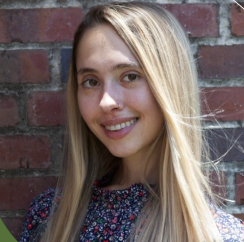
Alumni Spotlight: Keilana Hoffstetter, MS, ATR, RMHCI (BFA ’21)
Keilana Hoffstetter earned her Bachelor of Fine Arts in Studio Art from Florida State University in 2021, graduating magna cum laude and earning recognition on both the Dean’s List and President’s List. After completing her BFA with a focus on painting and digital media, she continued her studies at Florida State University, receiving a Master of Science in Art Therapy.
Today, Hoffstetter works as an art therapist with Inspire to Rise, Inc., where she provides individual and group therapy sessions. Her clinical experience spans a wide range of settings and populations, including psychiatric inpatient care, residential treatment, schools, substance use recovery programs, correctional institutions, and community-based mental health services. Grounded in an integrative approach that draws from cognitive behavioral, dialectical behavioral, and humanistic perspectives, she is committed to creating culturally inclusive spaces that support healing, self-expression, and personal empowerment.
Hoffstetter’s graduate training included internships with the Florida State University and Florida Department of Corrections Art Therapy in Prisons program, Turnabout, Inc., and Leon County Schools, where she worked with adolescents and adults facing emotional, behavioral, and substance-related challenges. Her career reflects the many ways a studio art education can evolve into a practice of creativity, service, and compassion.
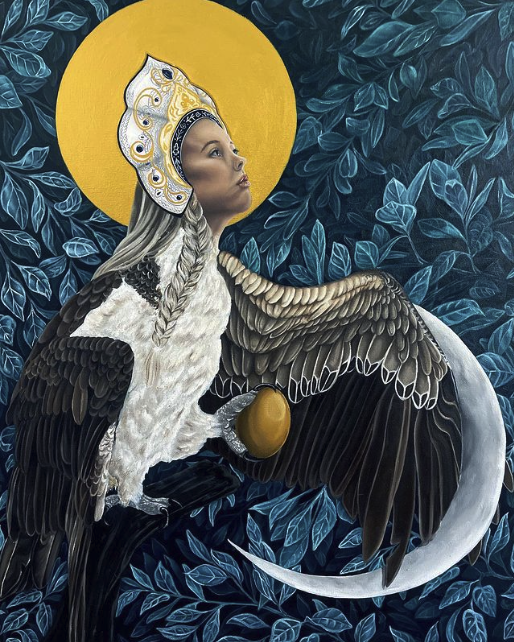
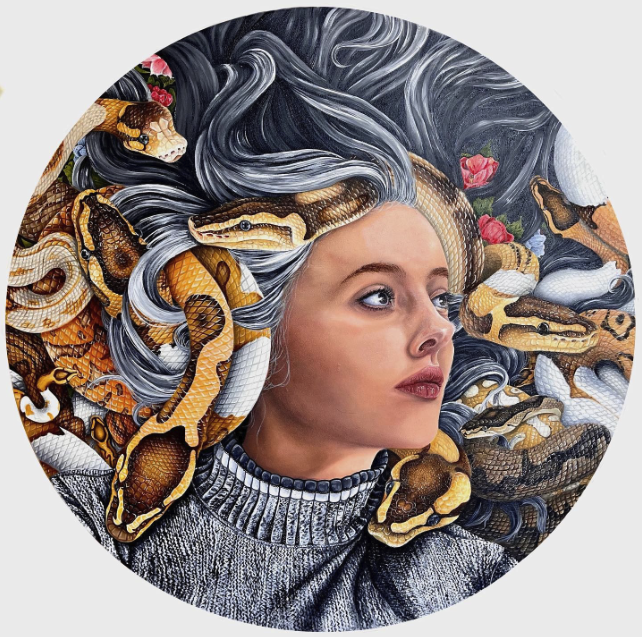

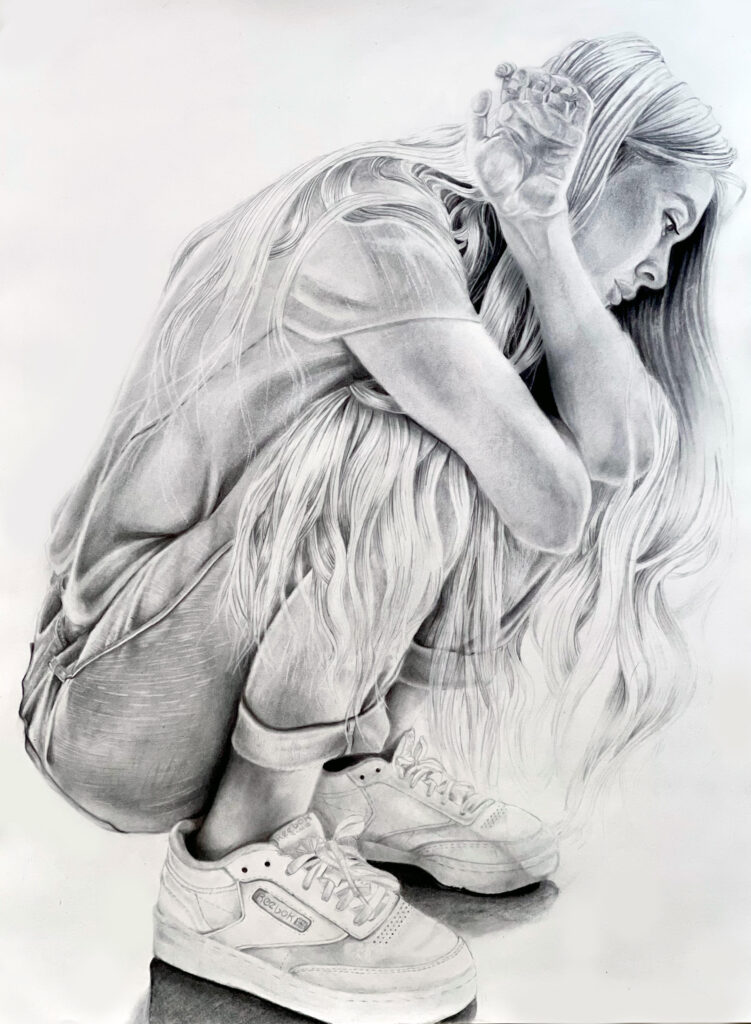

Interview with Keilana Hoffstetter
1. Looking back at your time at Florida State University, what faculty mentors, studio experiences, or projects most shaped your creative development?
Looking back at my time at Florida State University, the faculty mentors that were the most influential were Carrie Ann Baade, Alison Spence, and Clinton Sleeper. They were paramount in my artistic and scholarly development, encouraging me to push boundaries, take chances, and reflect on diverse perspectives. My BFA thesis shaped me the most as an artist and scholar, allowing me the opportunity to push my capacities in molding together psychology and fine art.
2. Your career has evolved from studio art into art therapy and mental health counseling. When did you first begin to see the connection between art-making and healing?
I began to first see the connection between art-making and healing when I was about 15 years old. When I was experiencing a difficult time in my life I turned to art as a way to process, make sense of, and cope. Seeing the healing and raw vulnerability inherent in my process, I knew that I was able to make sense of and document what previously evaded words alone.
3. As a practicing Registered Art Therapist, how does your background in studio art continue to inform your therapeutic work?
My background in studio art continues to inform my therapeutic work by encouraging me to remain engaged in my personal artistic practice and spread mental health awareness through sharing my work. Likewise, it allows me to feel competent that I can create unique interventions and view clients art in novel ways that allow for greater insight and self-growth.
4. Your path included exhibitions, internships in design and gallery work, teaching, and eventually graduate clinical training. How did those different experiences help shape your direction?
These experiences helped shape my direction by providing new opportunities to push myself in professional capacities that remain beneficial in post-graduate life. These experiences offered different skills that translate into professional life, such as maintaining deadlines, accountability, and independence.
5. Art therapy requires both creative intuition and psychological rigor. How do you balance those two dimensions in your work?
I balance these two dimensions in my work through using one another to continue to refine and build my competency in both domains. I process my clinical work through my personal artistic practice and use my insatiable desire to know, understand, and learn to remain up to date on clinical literature. Knowledge is an indispensable tool that not only allows me to provide the best services I can for clients but make sense of the imagery observed in client and personal artwork.
6. Many students may not realize that art can lead into therapeutic professions. What advice would you give to FSU art students interested in mental health, counseling, or healing-centered creative careers?
Advice I would give FSU art students interested in mental health, counseling, or healing-centered creative careers is to take your interests and passions and find ways to combine them, don’t abandon what you are driven towards. There are numerous avenues that could be pursued and ways in which different professions can combine and inform one another. Professionally, working in areas in which you hold a strong passion offers such fulfilment and satisfaction. Art is not contained to only gallery showing; it can be incorporated in a plethora of professions and settings that would not initially cross the mind.
7. What surprised you most about the transition from being an artist in the studio to supporting others through art in clinical settings?
What surprised me most about the transition was seeing how art could translate so well in diverse settings. I never thought I would be working in jails with inmates actively creating art by their side while providing an essential service to improve well-being. The dedication and rigor inherent in a studio process creates a foundation of accountability and adaptability that I have found to be invaluable in a professional clinical setting.
8. What does creativity mean to you now, compared to when you were an undergraduate artist?
Compared to when I was an undergraduate artist, my perspective of creativity has expanded in ways I never considered. It is an inherent process of authentic self-representation that speaks more than words alone. Creativity is connection to the self, the universal, and the beyond. I have always viewed art as raw expression, however, my experience in the mental health field with arts has expanded that realization beyond ways I initially understood.