Alumni Spotlight: Brad Blair (MFA ’14)
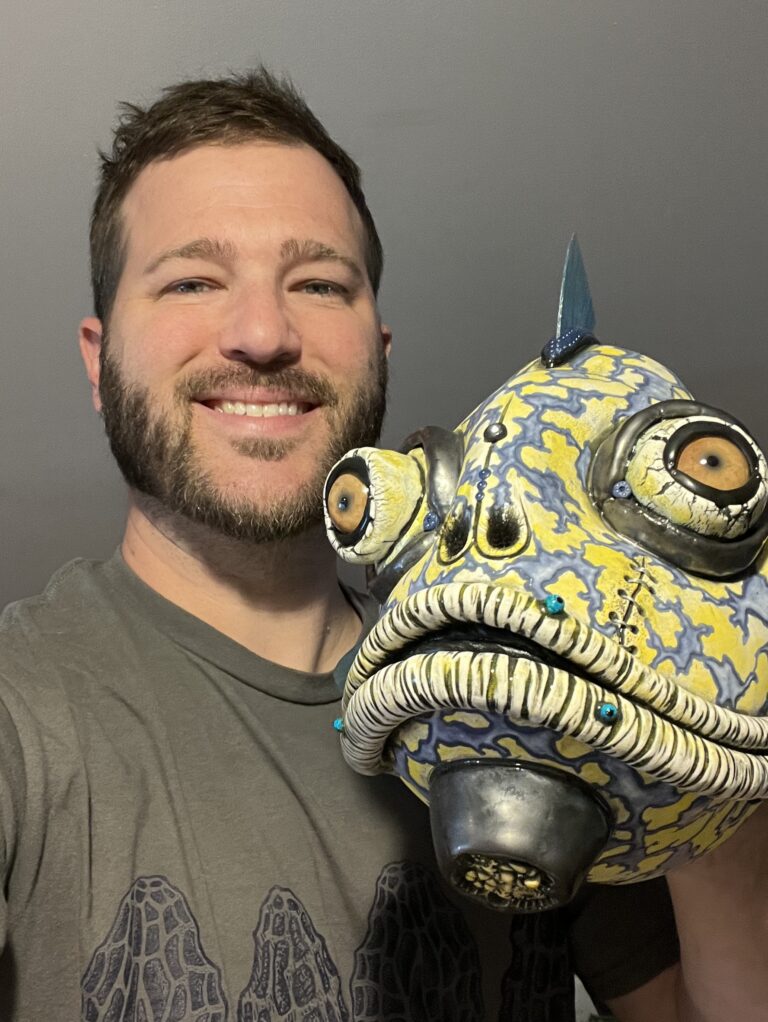
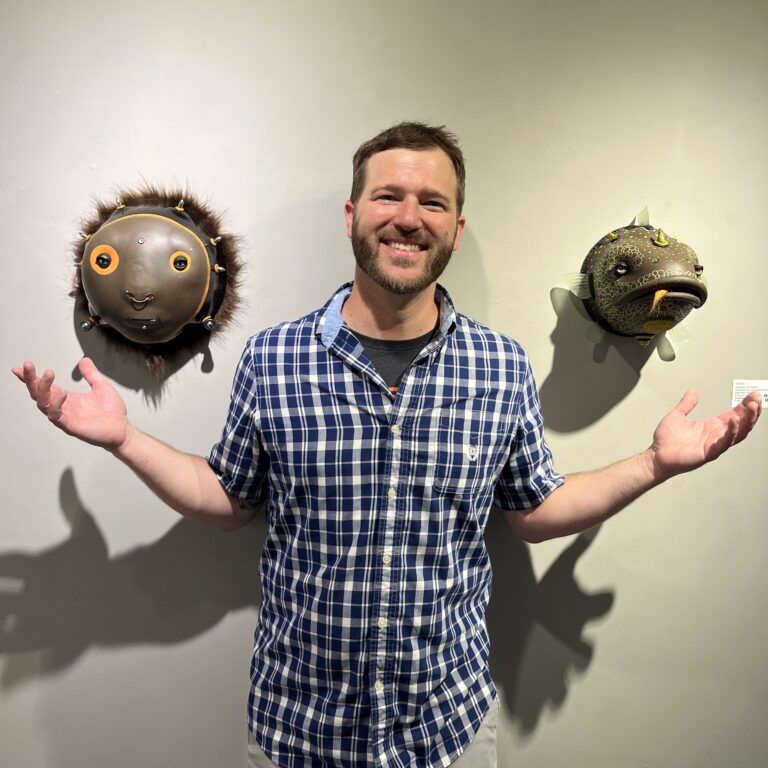
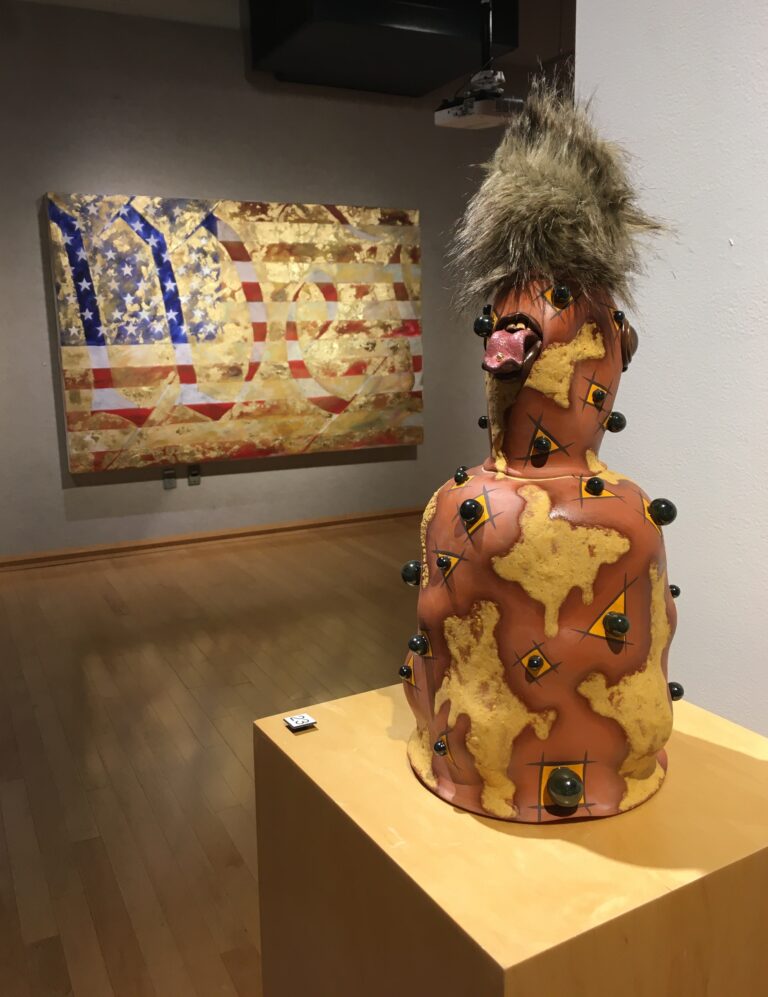
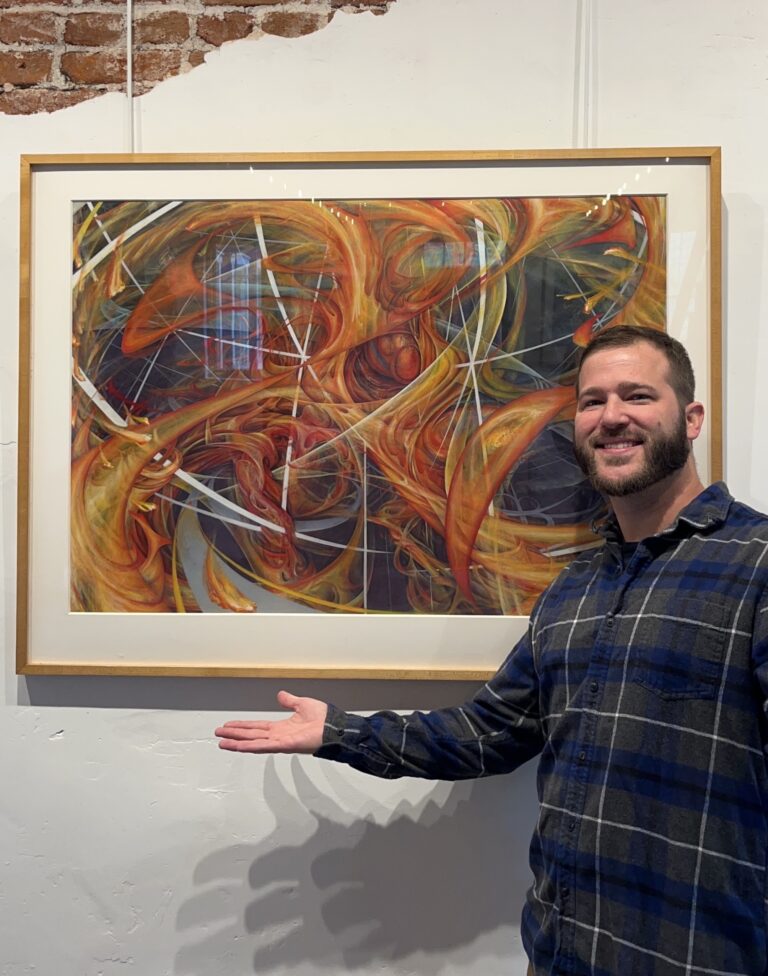
Florida State University alumnus Brad Blair (MFA Studio Art ’14) has built a multifaceted career as a ceramic artist, educator, curator, and arts administrator. Based in Baltimore County, Maryland, Blair is known for meticulously constructed ceramic sculptures that draw viewers into strange, imaginative worlds populated by hybrid creatures, biomorphic forms, and what he describes as sculptural “monstrosities.”
Blair earned his Master of Fine Arts in Studio Art with a focus in Ceramics from Florida State University in 2014, following a B.S. in Art and Design with a concentration in Ceramics from Towson University. While at FSU, he also taught ceramics as an adjunct instructor and received the Department of Art’s Area Award in Ceramics as well as a nomination for FSU’s Outstanding Teaching Assistant Award.
Since earning his MFA, Blair has sustained a professional practice that combines making, exhibiting, teaching, and curating. He has taught ceramics at institutions including Baltimore Clayworks, New Phoenix Pottery, and Manor Mill, and since 2016 has served as an Adjunct Professor of Ceramics at Towson University. He currently teaches within Towson’s Department of Art + Design, Art History, and Art Education.
Blair has also developed a significant curatorial and community arts practice. From 2016 to 2023, he served as Chesapeake Gallery Coordinator at Harford Community College. Since 2023, he has served as Gallery Curator and Ceramics Instructor at Manor Mill in Monkton, Maryland, where his work extends beyond his own studio practice to creating exhibition opportunities and supporting other artists.
His sculptures explore the territory between the recognizable and the unknown. Drawing on imagination, natural forms, science fiction, fantasy, mutation, and the uncanny, Blair constructs detailed ceramic organisms and creatures that appear simultaneously biological and invented. Through these works, he invites viewers to consider possibilities beyond the limits of familiar reality.
Blair has exhibited his work nationally for more than a decade. His solo exhibitions include Cellar Dwellers at Manor Mill’s Cellar Gallery and Believe in Beyond at Creative York in 2024; Divergent Entities at The Delaplaine Arts Center in Frederick, Maryland in 2023; Obscure Oddities: Clay Creations at the Allegany Arts Council in Cumberland, Maryland; A Glimpse Into Beyond at Saratoga Clay Arts Center in New York; and Aberrant Beings at Baltimore Clayworks.
His work has also received numerous honors. In 2024, Blair received the San Joaquin Potters Guild Founders Award in the national Visions in Clay exhibition at the LH Horton Jr. Gallery in Stockton, California. Earlier awards include an Award of Excellence at the 47th Annual Open Juried Exhibition in York, Pennsylvania, second place at What Goes Bump in the Night at Clay Arts Vegas, and Best of Show in the same exhibition the previous year.
Alongside his teaching and studio work, Blair continues to organize exhibitions through Manor Mill Gallery. His curatorial projects demonstrate how an artist’s professional life can expand beyond making objects alone to include mentorship, exhibition development, community building, and the creation of opportunities for other artists.
Blair’s career offers current FSU students an important example of how an MFA can lead to a sustained creative life built across several interconnected roles. His trajectory demonstrates that studio practice, teaching, curating, arts administration, and community engagement do not have to exist separately. Together, they can form the foundation of a durable life in the arts.
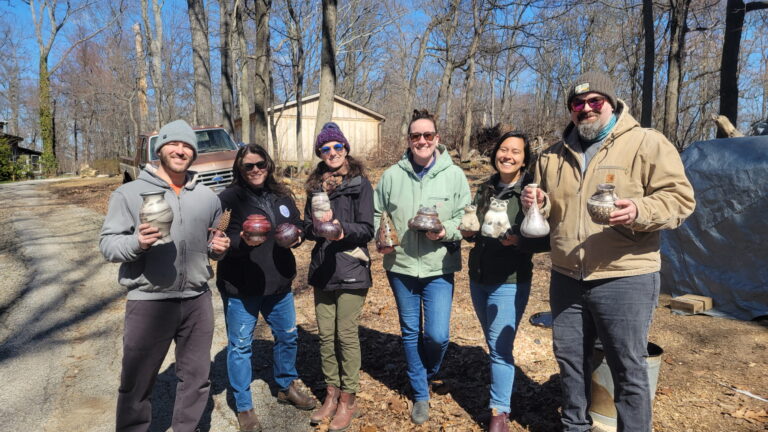
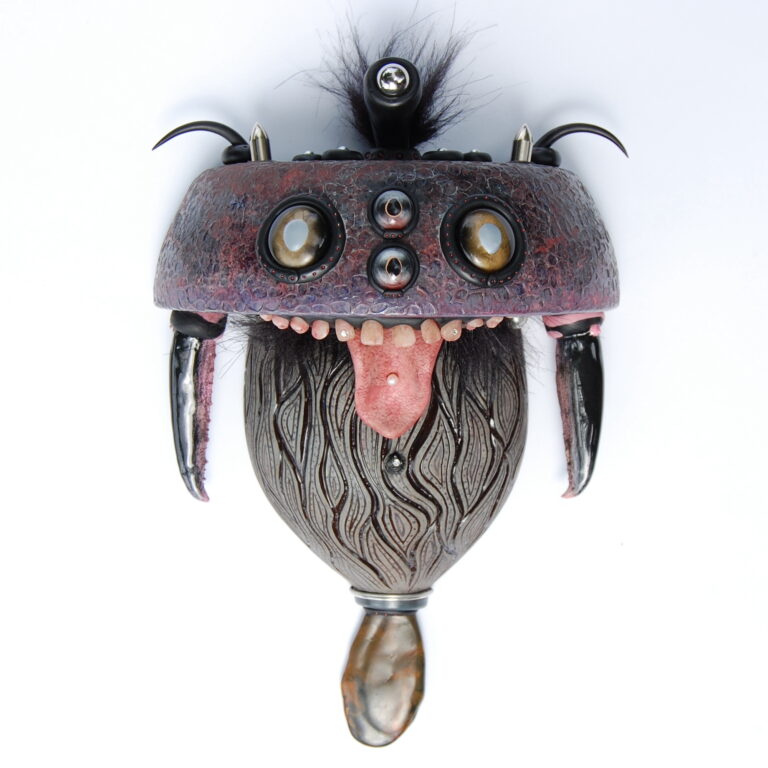
Interview with Brad Blair
1. Looking back at your time in the MFA program at Florida State University, what experiences, faculty mentors, critiques, or opportunities had the greatest influence on the artist you became?
A: Looking back, I absolutely loved my time and experiences as an MFA student at FSU. Working and bouncing ideas off of Holly Hanessian and Carrie Ann Baade primarily, I was really challenged to search deep within myself to discover my potential as an emerging artist.
An influential trip we took together as a second year class to NYC organized by Carrie Ann Baade to visit the studios of a few amazing contemporary artists, was something I’ll never forget. Some of these included the studios of painters Martin Wittfooth, and one of my favorite artists to date, Christian Rex Van Minnen. Both extraordinary artists that have only grown since we visited their studios. We also went to a small exhibit by sculptor Kate Clark, who works with taxidermy animals with human-like faces. She spoke to us about her work and process which really inspired me and gave me ideas about incorporating taxidermy parts, such as glass animal eyes and resin cast teeth, into my own artwork.
An opportunity that I took advantage of was the 24 hour open studio access and resources/tools/machinery available we had as MFA students. I spent upwards of 10+ hours in my studio most days, and looking back I’m so glad that I did. Since leaving FSU, I’ve never had that amount of time of work in my studio. So to any current students I would say to spend as many hours as possible in your studio. Really take advantage of that time and immerse yourself in your practice, as you may never have the same opportunity/resources again.
2. You came to FSU after completing your undergraduate degree in ceramics at Towson University. What were you hoping to develop when you entered graduate school, and how did your work change during the MFA?
A: When I came to FSU, I was hoping to push my work further, and to grow as an artist, but I honestly didn’t know what to expect. I wanted to develop a strong body of work by the end of the three years, but that’s about all I knew for sure. The biggest challenge I encountered when entering the MFA program at FSU, and what turns out to be the best thing that happened to me and my practice, was that I was instructed to not use clay for my entire first year of the program. I was accepted into the MFA program with a full ceramic sculpture portfolio, and that is what I was comfortable working with. This removal of ceramics from my studio practice was scary and uncomfortable at first, but allowed me to explore a huge array of mediums and processess over a year span that I wouldn’t have if clay was still an option. Some of these materials/processes I experimented were cast aluminum, laminated & carved foam, fiberglass & plaster, faux furs & soft sculptures, cast resin, collage, drawing, painting, polymer clay, multi-media
installations, found objects assemblage, and more. Most of the experiments themselves weren’t wonderful pieces of art, but little did I know at the time, they were creating a foundation for what was to become my own personal style of mixed media ceramic sculpture.
When year two came around, I was instructed to use the materials and processes that I had experimented with in year one, and see how I could incorporate them into similar ceramic forms as I had came into the program with. I was really excited to get my hands back in the clay and see what would evolve. It turns out, this blend of clay and non-clay materials was the the biggest change in my work during the MFA program and is still the same style that I work in today.
3. Your sculptures often resemble unfamiliar organisms, creatures, or specimens from another world. Where does this imagery come from, and what draws you to the boundary between the biological, imaginary, and unknown?
A: This imagery stemmed initially from being fascinated with the biological life at a young age. As a child, I spent endless hours exploring a stream in my back yard where I would find, collect, and learn about crayfish, snakes, frogs, aquatic insects, and whatever else I could get my hands on. At the same time, I also played a lot of monster-themed video games, read every Goosebumps book available, learned about greek mythology, was introduced to cryptids of today’s world, and started watching creature-feature films. Furthermore, I have always had an active imagination and enjoyed sketching. Most of my sketches as a child, of no surprise, were of animals or monsters. So all the stones were subconsciously set in place for a foundation of future artistic inspiration revolving around imagined life.
As a young adult, I became more interested in the biological sciences, more fascinated with our universe, and more interested in drawing and ceramics. I began my college career during this time as a biology major, but soon after decided to follow my passion for art instead and switch majors. During undergrad, I also took a philosophy class that changed my mindset and general way of thinking forever as I adapted a new “question everything” mentality. This thought process opened my mind even more to the unknowns of our universe, specifically wondering about our own existence and the possibility of life beyond our planet.
Right before and throughout my time at FSU, I still had the same subconscious thoughts, inspirations, and mindset. I also knew I wanted to make creature-like forms that live within the boundaries of the biological, imaginary, and the unknown, yet I wasn’t exactly sure what that creative evolution would look like at the time.
4. You have described your work as creating detailed sculptural monstrosities that can open viewers’ minds to a different reality. What can the monstrous or unfamiliar communicate that more conventional imagery cannot?
A: The monstrous and the unfamiliar make people pause, question, wonder, and use their imagination to process what they are seeing, even if only for a few seconds. This temporarily transports them to a different reality, the unknown. I believe this is a powerful aspect of my work and the work of others who explore this same realm. Many people have lost touch with their imagination and when forced to confront it, can create a memorable moment.
Conventional imagery is blasted at us in such high volumes in today’s world with smart phones and social media that it takes a lot to stand out while creating an visual and psychological experience for the viewer. I strive to achieve this through a monstrous, unfamiliar, and sometimes uncomfortable style of artwork.
5. Your work requires extraordinary patience and technical control. How do material experimentation, craftsmanship, and imagination interact in your studio process?
A: Experimentation, craftsmanship, and imagination collide powerfully into each other within my making process. These, along with my patience and strong technical abilities allow me to successfully create the work I do. I’ve never had the same amount of experimentation time as I did while an MFA student at FSU, but it’s still a very important part of my process. I tell myself that I must try one new technique &/or use one new medium/material in every piece I create. This slowly continues to broaden my creative knowledge and adds to the pool of options that I can choose to apply to future works.
Craftsmanship has always been at the top of the list for me as an artist. This is sometimes a downfall because it’s really hard for me to work “looser” and inevitable I am a bit of a perfectionist because of how much I care about craftsmanship and detail. This also adds tons of time to my making process, but I never let that time be a deterrent, and have actually embraced the time it takes, as I know it usually pays off in the end. In general, however long it takes to complete the detailed/technical task as accurately as accurately, is how long I will spend on it. The moment I try to speed up my process, I make mistakes… which quickly slows my process back down.
Having an imaginative mindset while making is imperative for me and allows me to have fun and create without restriction. It also helps me visualize pieces both before and while creating them. I feel lucky to have such an active imagination as an adult, as I feel it greatly assists me in my artistic practice. The interaction of patience, control, experimentation, craftsmanship and imagination continue to drive my work forward to this day.
6. Ceramics is often associated with function and tradition, while your work moves strongly toward sculpture and speculative form. How has your relationship to the history and conventions of ceramics shaped your practice?
A: I began my ceramics journey making functional pottery, learning its history, creating items inspired by traditional Japanese tea bowls, Grecian urns, Egyptian pottery, and experimented with wood and soda firing, and focusing on functional works that are
made to be used in daily life. I still appreciate the long history of ceramics and I still make pottery and teach wheel throwing classes to this day. That being said, the satisfaction I feel from making a non-traditional ceramic with mixed media sculpture is by far stronger than that of any pottery I’ve created.
During my second year at FSU, I spent so much time experimenting and integrating clay with non clay elements, freeing myself of any conventional grips that ceramics may have had on me. This allowed my process to become freeing and uniquely mine. I didn’t let any traditions of ceramics stop me from experimenting and letting myself create a voice of my own within the ceramics field. This goes back to my learned “question everything” mentality from a past philosophy class, allowing me to chose my own path and make my own decisions. They way I see it is when ceramic work is sculptural, there should be no limitations. When ceramic work is functional, there’s a different set of guidelines to be followed for the functionality, ergonomics, safety, and usability of each piece.
7. You have also had numerous solo exhibitions, including Cellar Dwellers, Believe in Beyond, Divergent Entities, Obscure Oddities, A Glimpse Into Beyond, and Aberrant Beings. How does preparing for a solo exhibition change the way you think about individual works and the larger world they create together?
A: Being selected for solo exhibit is wonderful news but it also means that the pressure is on to create and organize a strong cohesive exhibit. Preparing for a solo exhibition has always been intense for me, but I trust the process, put my head down, and get to work. The two ways I change my making process for a solo exhibit are the increased speed and hours working, and ensuring I have a range of both wall and pedestal pieces available to create a dynamic exhibit. All of my works are similar enough in style & theme that they all usually work well together when hung, with some connections stronger than others as expected..
The down side of preparing for a solo exhibit is the feeling of burnout I usually experience in the days leading up to the Opening Reception and even for weeks thereafter. This is due to the endless work hours invested in preparation. Although I must say, it is an amazing feeling to know how much artwork I have the ability to create when the pressure is on and a deadline is near!
8. You have worked not only as an artist and teacher but also as a gallery coordinator and curator. What have you learned from being on the other side of the exhibition process?
A: I’ve learned a lot from being on the other side of the exhibition process, especially with my current role at Manor Mill Gallery. The biggest thing is how important it is for artists to be prompt and organized when it comes to working with a gallery. This includes following gallery submission guidelines, meeting deadlines along the way, and using the correct hardware that the gallery requires to hang works. Anything that isn’t done correctly directly add’s work to my plate as the gallery director/curator/& preparator and usually isn’t forgotten. Small errors here and there are OK but the artists who stand out to me and make the most memorable impression in a positive way are the ones who are on top of their game fro the beginning. They turn everything in on time, following all the requirements we have in place, and have a friendly personality. It all goes a long way. Don’t take a gallery’s requirements as suggestions. Follow them strictly and it may even assist in future opportunities with the same gallery. Knowing this, I’ve also strengthened my organizational skills as an artist and give the galleries I work with the same promptness and organization that I expect as a curator.
9. What do you look for when selecting artists or developing an exhibition at Manor Mill Gallery? Has curating changed the way you think about presenting your own work?
A: At Manor Mill Gallery, we primarily host themed fine art exhibits, which I organize and plan about six months to a year in advance. Instead of hosting a typical “Call for Submissions” I spend more time on the backend searching for the strongest artists in the region that fit the theme at hand, then reach out and invite them to exhibit individually. Forming exhibits in this way allows me to include wonderful artists, both 2D & 3D, who may never heard of Manor Mill Gallery before. It’s very rewarding to offer exhibition opportunities to artists who are usually always very grateful.
We do have a general artwork submission webpage where anyone can submit their work for future consideration, but only about 20% of our exhibiting artists are pulled from these submissions. I usually accept about 12-18 artists per exhibit, and ask each artist for about 5-8 works. This invests artists deeper into the exhibit, versus only accepting 1-2 artworks like a typical large group exhibit. We also require all works to be for sale, so sometimes this prevents specific works from being shown, but is rarely ever an issue.
My focus is specifically highlighting artists within about about a 100 mile radius of Manor Mill Gallery. This is because I want the artists to attend the Opening Reception, and spread the word to their friends, family and collectors. I will occasionally invite an artist from a different state if there work is really amazing and they want to come teach a workshop or are eager to participate, but I’ve learned that there is an abundance of strong artists within the northern Baltimore region so I usually don’t have to look too far to find artists and create a strong and engaging exhibition.
Curating has slightly affected the way I think about presenting my own artwork, but not in any dramatic way. As I gain more experience in the gallery, my ability to find connections between artworks and displaying them in an attractive, precise, and eye catching way has strengthened. Therefore those skills do rollover when hanging shows of my own. I also make sure the artwork labels/tags are clean and neatly displayed. A crooked or sloppy label can throw off the viewer’s eye when observing artworks, which is never a good thing.
10. What has surprised you most about sustaining a professional life in the arts since graduating from FSU?
A: What surprised me the most is how difficult it is to have a professional life in the arts. It takes a huge amount of determination and perseverance, as well as an ability to create opportunities for yourself and a belief to make them happen. In addition to these, making and keeping strong connections, staying humble, focused and really putting in the time and effort to get where you want to be is essential.
While in the MFA program at FSU, we did a ten year plan and I thought for sure I was going to be a full time professor and artist at this time in my life. I never had the intention of working in galleries as my main career. After a year and a half of only teaching part time post grad school, I saw a gallery coordinator position at a local community college and applied not knowing if I truly had the full skillset to work in a gallery, but after I was hired for the position, I discovered that it was something that I really enjoyed and became passionate about.
After several years at the community college gallery, as well as jointly adjunct instructing at Towson University, and continuing to have an active studio practice of my own, I was offered my current position at Manor Mill Gallery, which I gladly accepted. This role embodies so much more than my position at the community college, as I get to create the themes of our exhibits, select the specific artists, plan gallery relates classes and events, and layout/hang the exhibits. This combination of current positions within the field has led me to an enjoyable and sustainable life within the arts.
15. What advice would you give current FSU undergraduate and graduate students who hope to maintain an active studio practice while also building careers in teaching, galleries, museums, or community arts?
A: Get ready to put in a lot of time and effort! In general, you need to out hustle your competition if you want to succeed and be offered opportunities in life. On the fine art side, try to establish a studio schedule where you make time every week, or every day if your schedule allows, to experiment and make work in your studio. This is so important. Humans are creatures of habit, so start a good studio routine and before you know it, working in your studio will just be a part of your routine. Know that not everything you create is going to be your next best piece. Sometimes you just have to work through different processes and experiments in order to eventually create something you’re truly happy with. But ALL time spent in the studio is helping you evolve.
Once you have work you are proud of, try to get it out into the world through social media, submit artwork to various galleries until you find your niche, and understand that rejection is part of the process. I have been accepted into many juried shows, but I have also gotten rejected by equally as many.
Learning strong time-management and organizational skills will help you have a successful and productive studio practice, as well as in every other area of your life. I’ve always enjoyed making and teaching, then I slowly adapted a career in galleries, but refused to give up my other passions… so I just simply had to figure it out if I wanted to do it all. I say all of this and I am not even including the time needed to build a family, maintain strong relationships, and pursue other hobbies/passions.
In general, keeping focused on your goals, always being kind and building a strong character (word spreads), staying humble, and not trying to verbally convince people how great you or your artwork is, are all very important. Let your resume, personality, and skills speak for themselves, while at the same time carry a level of confidence that lets people know you’re serious about working in the field. This should help open some doors for you throughout your career but especially as younger artists emerging into this highly competitive field from the MFA program.
16. Looking back more than a decade after completing your MFA, what do you wish you could tell yourself as you were preparing to graduate from FSU in 2014?
A: Looking back on my final year in the MFA program at FSU, I wish I could have told myself to remain more open-minded about the different career paths and opportunities available within the arts, rather than limiting myself to the career I had envisioned for myself. Even though I currently have various positions with the field of art, when preparing to graduate from FSU, I was pretty set on solely teaching at the college level and eventually becoming a full-time college professor. But after graduating, I realized it was really hard to find adjunct positions, and was very grateful when I landed one… but one wasn’t enough financially. Over a year and a half timespan I spent so many hours applying for adjunct rolls in the arts at every community college and university within my region. I wasn’t looking for anything else and I was very determined, but the truth is, it’s difficult to find multiple adjunct positions and it can be a little defeating. If I left the program knowing this, maybe I would have found different job opportunities in the arts sooner, while continuing to keep an eye out for more desirable opportunities. But everything happens for a reason, and in the end, I’m happy where I currently stand and the life I’ve created within the field of fine art.
Recent Accomplishments
2026
Towson University Faculty Biennial, Center for the Arts Gallery, Towson University, Towson, MD
Blair was among the participating faculty artists in Towson University’s 2026 Faculty Biennial, which presented recent work by faculty from the Department of Art + Design, Art History, and Art Education.
Towson University 2026 Faculty Biennial
2024
San Joaquin Potters Guild Founders Award, Visions in Clay 2024, LH Horton Jr. Gallery, San Joaquin Delta College, Stockton, CA
Visions in Clay is a longstanding national exhibition devoted to contemporary ceramic art.
Visions in Clay, LH Horton Jr. Gallery
Cellar Dwellers, Solo Exhibition, Manor Mill’s Cellar Gallery, Monkton, MD
Believe in Beyond, Solo Exhibition, The Art Lab at Creative York, York, PA
2023
Divergent Entities, Solo Exhibition, The East Main Gallery at The Delaplaine Arts Center, Frederick, MD
Gallery Curator and Ceramics Instructor, Manor Mill, Monkton, MD
Selected Earlier Solo Exhibitions
Obscure Oddities: Clay Creations, Saville Gallery, Allegany Arts Council, Cumberland, MD, 2020
A Glimpse Into Beyond, Schacht Gallery, Saratoga Clay Arts Center, Schuylerville, NY, 2019
Aberrant Beings, Baltimore Clayworks, Baltimore, MD, 2018
Unknown, Uncertain and Unexplained, The Delaplaine Arts Center, Frederick, MD, 2017
Professional Roles
Adjunct Professor of Ceramics, Towson University, 2016–Present
Towson University Department of Art + Design, Art History, and Art Education
Gallery Curator, Manor Mill Gallery, 2023–Present
Ceramics Instructor, Manor Mill, 2023–Present
Chesapeake Gallery Coordinator, Harford Community College, 2016–2023
Ceramics Instructor, New Phoenix Pottery, 2017–2023
Ceramics Instructor, Baltimore Clayworks, 2014–2020